
Conservative treatments
These nonmedical treatments or approaches can typically improve obstructive sleep apnea or resolve it. They aren’t cures, but they can reduce apnea to the point where it stops happening or isn’t severe enough to cause symptoms. These include:
- Weight loss. A 10% decrease in body weight can significantly improve sleep apnea for people who have excess weight or obesity.
- Position changes while sleeping and sleep aid items. Sleeping on your back makes sleep apnea more likely to happen. Special support pillows and similar items can help change the position in which you sleep, keeping you off your back so soft tissue doesn’t press on your windpipe and block breathing.
- Nasal sprays, adhesive strips, etc. These over-the-counter products improve breathing by making it easier for air to travel through your nose. While they can’t help moderate or severe sleep apnea, they can sometimes help snoring and mild sleep apnea.
- Treating the underlying condition. Treating conditions such as heart failure can often improve central sleep apnea.
- Medication changes. Working with your doctor to decrease or stop opioid pain medications may be able to improve or even resolve central sleep apnea.
Positive airway pressure (PAP) and adaptive ventilation
Positive airway pressure is a method that uses a specialized device to increase the air pressure inside of your airway while you inhale.
Pressurized air down your windpipe by a mask keeps it open so you can breathe. These devices push air through a hose that attaches to a special mask you wear on your face while you sleep. Masks can cover your nose, mouth or both, and there are many different types and styles to choose from.
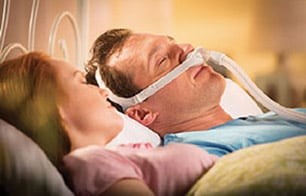
The best-known PAP device is the Continuous Positive Airway Pressure (CPAP) machine. Also referred to as APAP or automatic titrating positive airway pressure, this treatment involves a device which also supplies a constant stream of pressurized air. However, with AutoPAP the air pressure setting can be adjusted as you sleep.
Instead of having one fixed pressure setting throughout the night, an APAP device can automatically adjust the pressure setting if conditions change during the night.
Oral devices
Obstructive sleep apnea happens when soft tissue in your head or neck, especially around your mouth and jaw, press downward on your windpipe. Special mouthpiece devices can help hold your jaw and tongue in a position that keeps pressure off your windpipe. Dentists and sleep medicine specialists often work together to make these for people who need them.