Sleep Angel Global
Gallery
Newsletter
Subscribe to our newsletter
HARBİYE MAH. BOSTAN SOK. NO 10/2 NİŞANTAŞI (KARAKOL SOKAĞI) İSTANBUL / TÜRKİYE

OFFICE HOURS: 09.00AM - 18.00PM

A diagnosis of sleep apnea can only be made after a sleep study confirms you are experiencing breathing problems in your sleep, and other sleep disorders or health problems have been ruled out. In order to determine whether you should be referred for a sleep study, a doctor will first perform a physical exam, ask about symptoms, and collect your personal and family history.
A polysomnogram is a sleep study in which medical devices are used to monitor a person’s breathing, heart rate, and the electrical activity of their brain waves while they sleep. A person must have a polysomnogram, either in a sleep lab or at home, in order to be diagnosed with sleep apnea.
If you have a polysomnogram at a sleep lab, your health care provider will give you instructions on when to arrive, what to bring with you, and whether you should make any changes to your diet or medications that day.
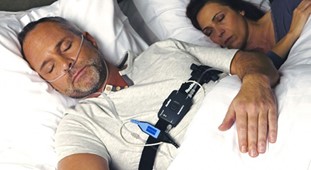
After acclimating to your room at a sleep lab, a technician attaches monitoring devices to your legs, fingers, chest, and head. The devices measure body processes while you sleep. The data are then translated into stages of sleep, wakefulness, and events where breathing is interrupted.

A home sleep apnea test may be an option for people who are suspected of having moderate to severe obstructive sleep apnea based on their symptoms or physical exam. An Home Test takes fewer measurements than an in-lab sleep study, so it is not the preferred choice for people who are suspected of having other sleep disorders.
That said, home sleep apnea tests do provide some benefits. For example, when a person sleeps in the comfort of their own home, they are more likely to have longer periods of sleep.
To set up a home sleep apnea test device, you strap a device across your abdomen and chest, wear an oxygen probe on your finger, and insert a nasal tube.

Conservative treatments
These nonmedical treatments or approaches can typically improve obstructive sleep apnea or resolve it. They aren’t cures, but they can reduce apnea to the point where it stops happening or isn’t severe enough to cause symptoms. These include:
Positive airway pressure (PAP) and adaptive ventilation
Positive airway pressure is a method that uses a specialized device to increase the air pressure inside of your airway while you inhale.
Pressurized air down your windpipe by a mask keeps it open so you can breathe. These devices push air through a hose that attaches to a special mask you wear on your face while you sleep. Masks can cover your nose, mouth or both, and there are many different types and styles to choose from.
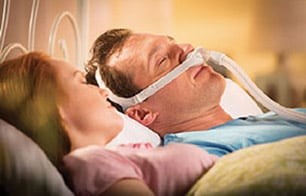
The best-known PAP device is the Continuous Positive Airway Pressure (CPAP) machine. Also referred to as APAP or automatic titrating positive airway pressure, this treatment involves a device which also supplies a constant stream of pressurized air. However, with AutoPAP the air pressure setting can be adjusted as you sleep.
Instead of having one fixed pressure setting throughout the night, an APAP device can automatically adjust the pressure setting if conditions change during the night.
Oral devices
Obstructive sleep apnea happens when soft tissue in your head or neck, especially around your mouth and jaw, press downward on your windpipe. Special mouthpiece devices can help hold your jaw and tongue in a position that keeps pressure off your windpipe. Dentists and sleep medicine specialists often work together to make these for people who need them.